Monday, June 8, 2026
Your New Bottleneck Is Code Review
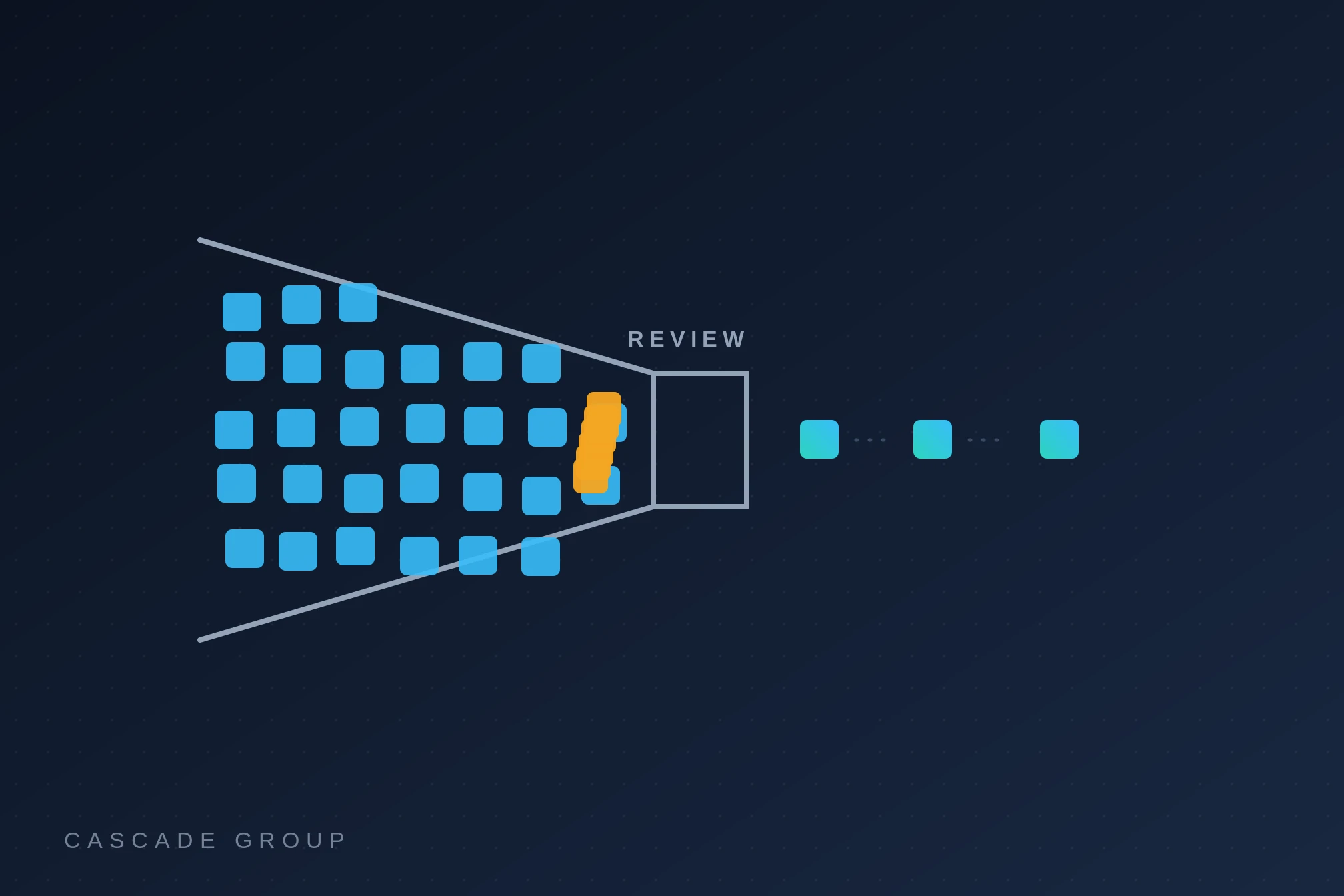
For most of software history, writing code was the expensive part. AI changed that in about two years. Generation is now cheap, fast, and abundant — and every constraint that used to hide behind slow generation is suddenly exposed. The biggest one, in almost every organization I look at, is code review.
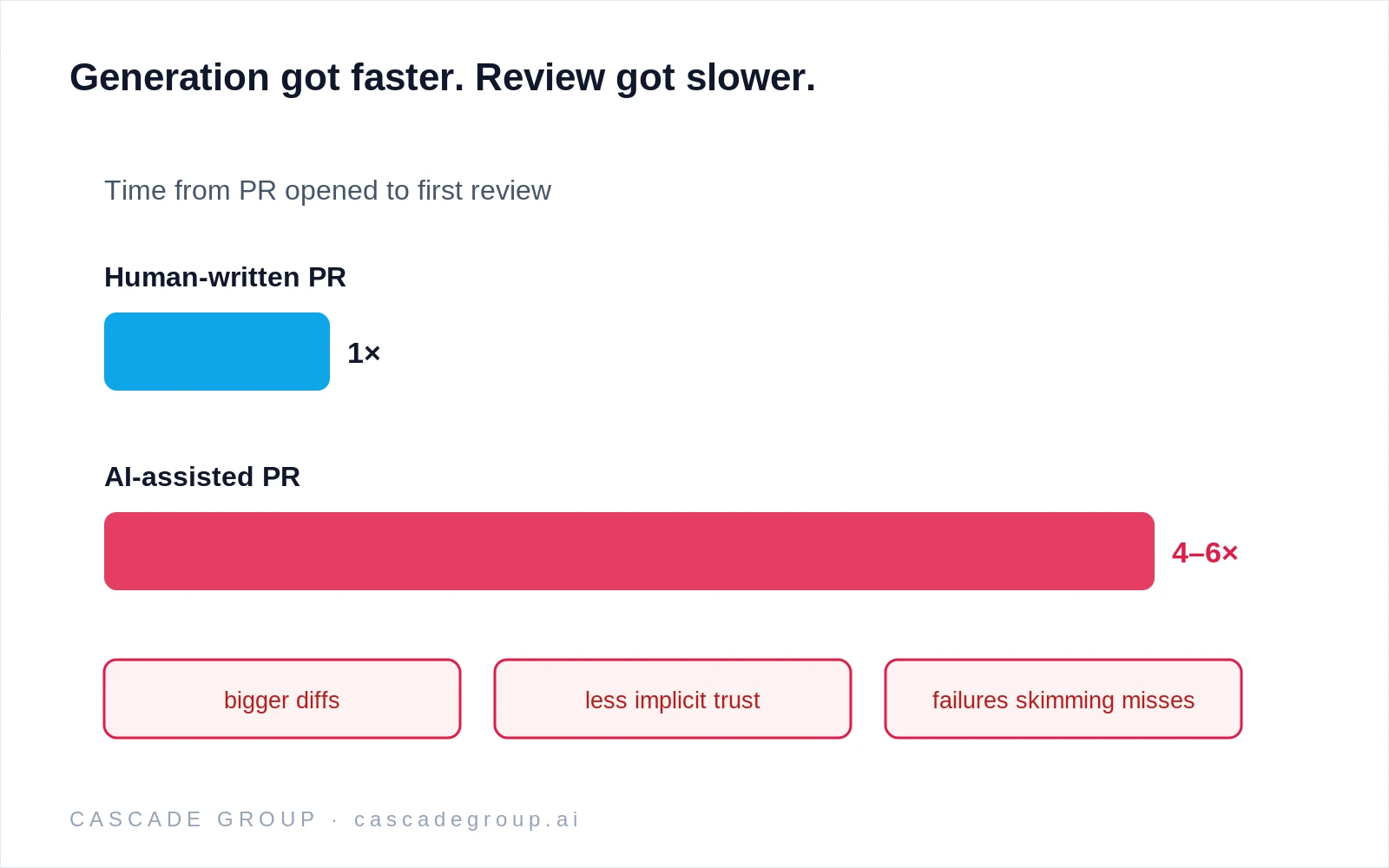
Recent industry analyses put numbers on what reviewers already feel: AI-assisted pull requests can wait several times longer for review than human-written ones. Meanwhile, studies keep finding elevated defect and vulnerability rates in AI-generated code that ships without adequate scrutiny. Put those together and you get the defining engineering-process problem of 2026: the code faucet is wide open, and the drain hasn't changed size.
Why AI PRs sit longer
It's not irrational reviewer behavior. It's three rational responses stacking up.
AI-assisted PRs tend to be bigger. When generating 400 lines costs the same as 40, engineers generate 400, and review effort scales worse than linearly with PR size. They also carry less implicit trust. When a senior engineer you've worked with for years submits a PR, you're reviewing the diff plus a track record. When that engineer submits 600 lines an agent wrote, the track record applies to their review of the code, not the code — and reviewers can sense the difference, especially when the author's grasp of the diff is shallow. And the failure modes are worse: AI code fails less like typos and more like confident wrongness — plausible structure, correct style, subtle misunderstanding of the domain. That's precisely the kind of bug that skimming misses, so conscientious reviewers slow down.
The result: your organization generates code faster and ships at the same speed or slower, while your senior engineers — your scarcest resource — absorb the difference as review load.
What actually helps
Cap what AI abundance inflates. PR size norms matter more now, not less. If agents make big diffs cheap, your process has to make big diffs expensive again. Teams that enforce small, single-purpose PRs feel this bottleneck far less.
Make authors accountable for comprehension. The rule that fixes the trust problem is simple: you own what you submit, and you should be able to defend every line in review as if you wrote it. Some teams ask authors to annotate AI-heavy PRs with what they verified and how. It sounds bureaucratic; in practice it takes minutes and cuts review time by shifting diligence back where it belongs.
Spend your automation budget on review, not just generation. Most teams bought generation tools first and left review as-is. Backwards, given where the bottleneck is. Static analysis, automated security scanning, AI-assisted first-pass review that flags risk areas for human attention — these widen the drain. Human reviewers should be spending their attention on design and domain correctness, not on catching the null check a linter could have caught.
Watch review time as a first-class metric. If you measure nothing else about your AI rollout this quarter, measure time-in-review, split by AI-assisted versus not. It's the single clearest signal of whether generation gains are becoming delivery gains or just piling up as inventory.
The teams handling this well haven't slowed their AI usage down. They've upgraded the parts of their system that AI puts under pressure. That's the general pattern with this technology: it doesn't remove your constraints, it moves them — and it rewards the teams that notice where.
Finding where your constraint moved is a big part of what our AI readiness assessment looks at.