Monday, June 15, 2026
Fable 5 Is Impressive. It Still Won't Fix Your Adoption Problem
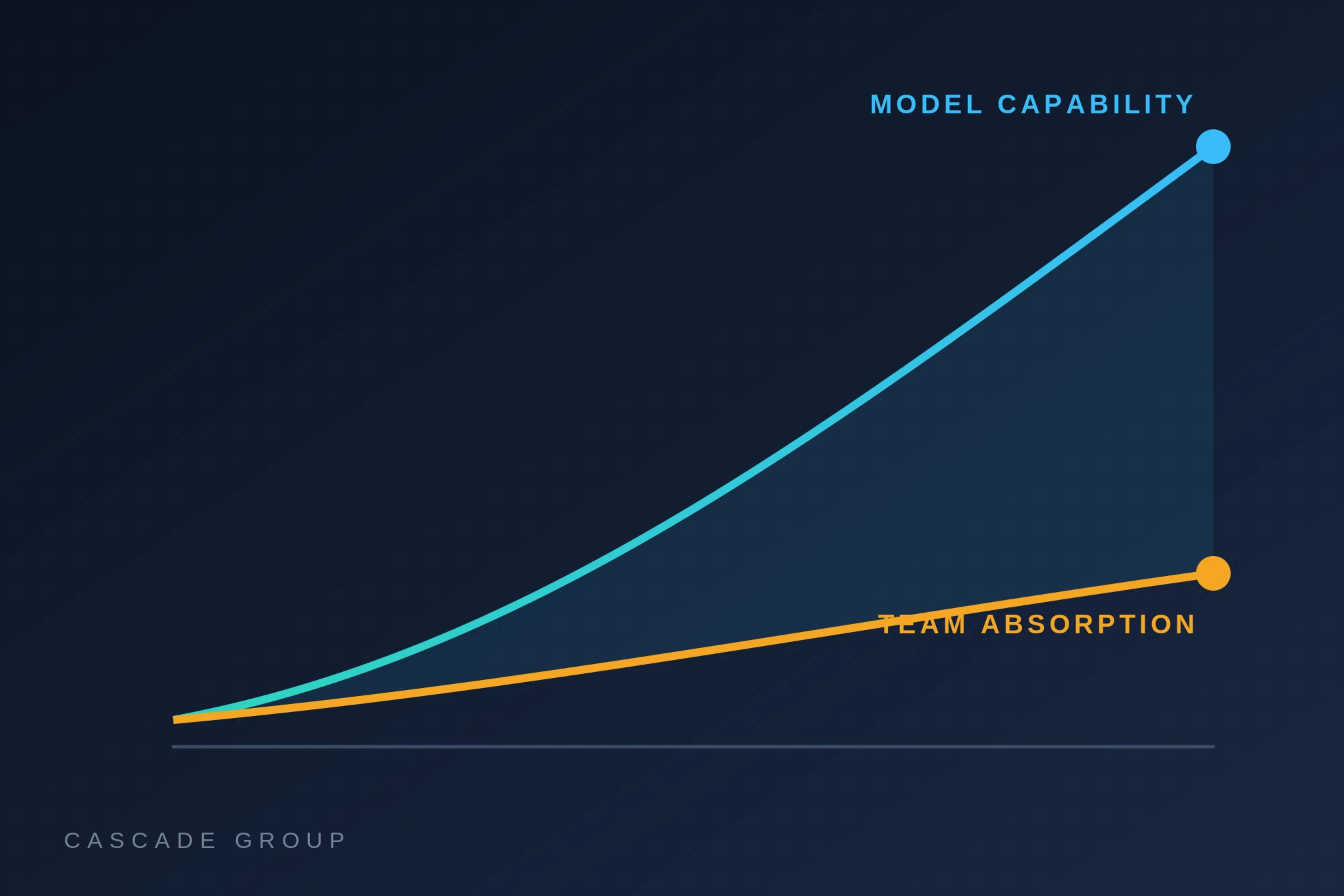
Anthropic shipped Claude Fable 5 last week, and the numbers are real: 88.6% on SWE-bench Verified, state-of-the-art across the agentic coding benchmarks, available inside GitHub Copilot the same day it launched. My feeds filled up immediately with two kinds of posts — engineers sharing impressive delegation runs, and engineering leaders asking whether they need to re-evaluate their entire toolchain. Again.
This happens every model cycle now. A frontier release drops, benchmark charts circulate, and somewhere a VP of Engineering gets asked in a leadership meeting why the team is "still on" whatever they standardized on eight weeks ago. So before you spin up another evaluation, a few observations from someone who runs tool evaluations for a living.
The model is rarely your constraint
Here's an uncomfortable test. Take your team's median engineer — not your power user, the median. Are they getting most of the value out of the model you already have? In nearly every organization I assess, the answer is no. Usage is shallow, workflows haven't changed, and the review process is congested.
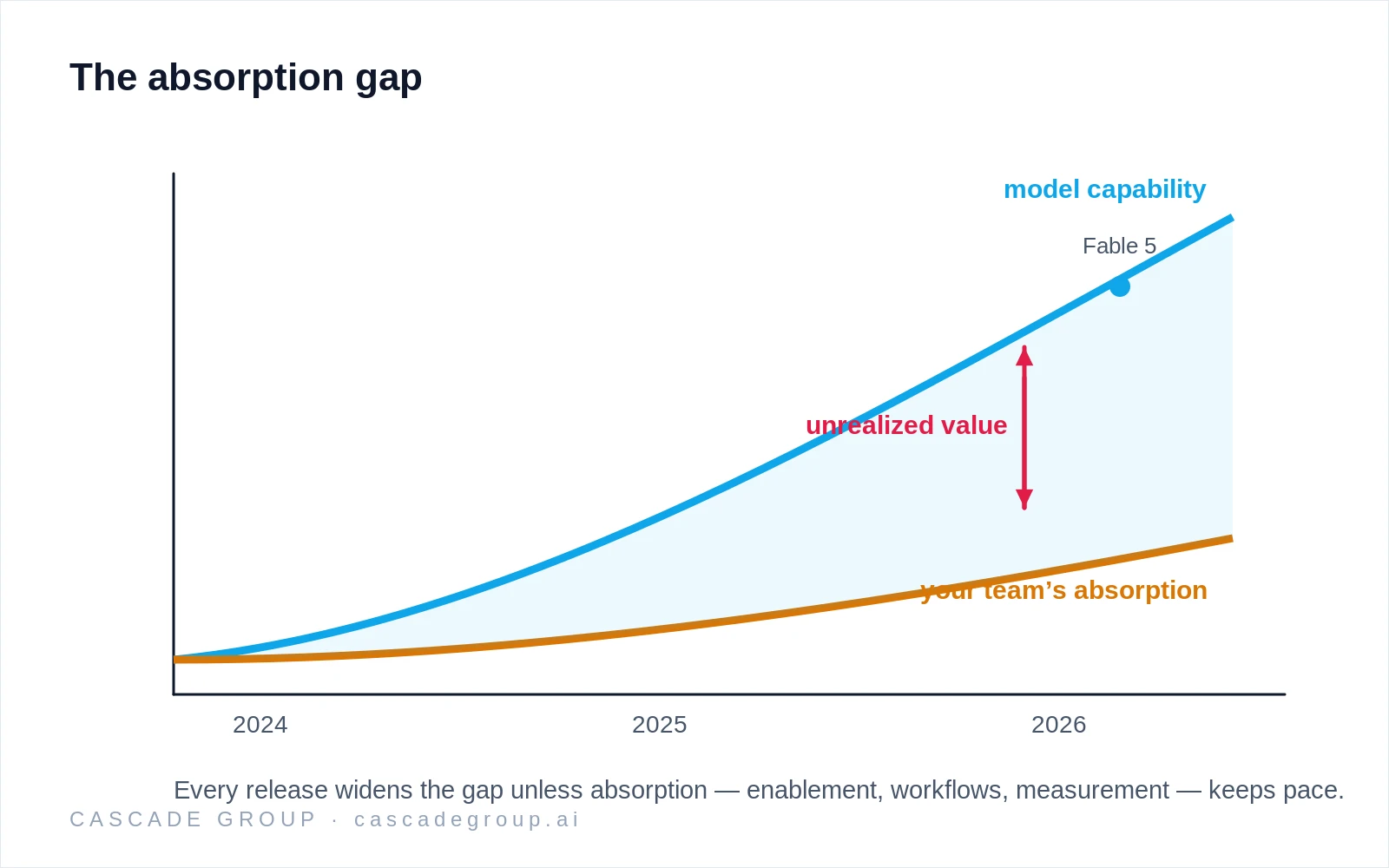
If that's your situation, a model that's ten points better on SWE-bench changes almost nothing for you. Your bottleneck isn't model capability; it's everything around it — enablement, integration, workflow design, measurement. Upgrading the engine on a car with square wheels is a category error, and it's the most common purchasing behavior in this market.
The teams that should care about Fable 5 immediately are the ones already operating near the frontier — deep agentic workflows, mature delegation practices, real measurement. For them, a capability jump translates to output quickly because the surrounding system is ready to absorb it. Notice the pattern: model improvements pay out proportionally to adoption maturity. Same multiplier logic as everything else in this space.
How to evaluate without thrashing
None of this means ignore new models. It means evaluate on your terms, not the news cycle's.
Decide your cadence in advance — say, a structured evaluation twice a year, plus an exception process for genuinely step-change releases. That single decision eliminates the weekly "should we be switching?" churn that burns leadership attention.
When you do evaluate, test on your work, not benchmarks. SWE-bench is a fine research yardstick and a poor proxy for your codebase. Pull a dozen recent real tasks — the actual tickets, the actual repos — and run candidates head-to-head on those. Include your worst legacy service, because that's where tools fail.
And measure the switching cost honestly. Configurations, learned team habits, integrations, prompt patterns embedded in workflows — a model that's 5% better on your tasks can easily be a net loss for a year once you price retraining fifty engineers. The good news is that the industry's convergence on standard protocols keeps pushing that switching cost down. But down is not zero.
The question to ask instead
When the next launch inevitably lands, replace "should we switch?" with "would our median engineer notice?" If your adoption depth is shallow, the honest answer is no — and your budget is better spent making the current stack actually used than making the unused stack more powerful.
Frontier models are improving faster than most organizations can absorb them. That means the scarce resource isn't capability anymore. It's absorption. Build that, and every future release — Fable 5 and whatever beats it — gets cheaper for you to capture.
Running this kind of head-to-head evaluation on your actual codebase is exactly what our AI tooling bake-off service does.